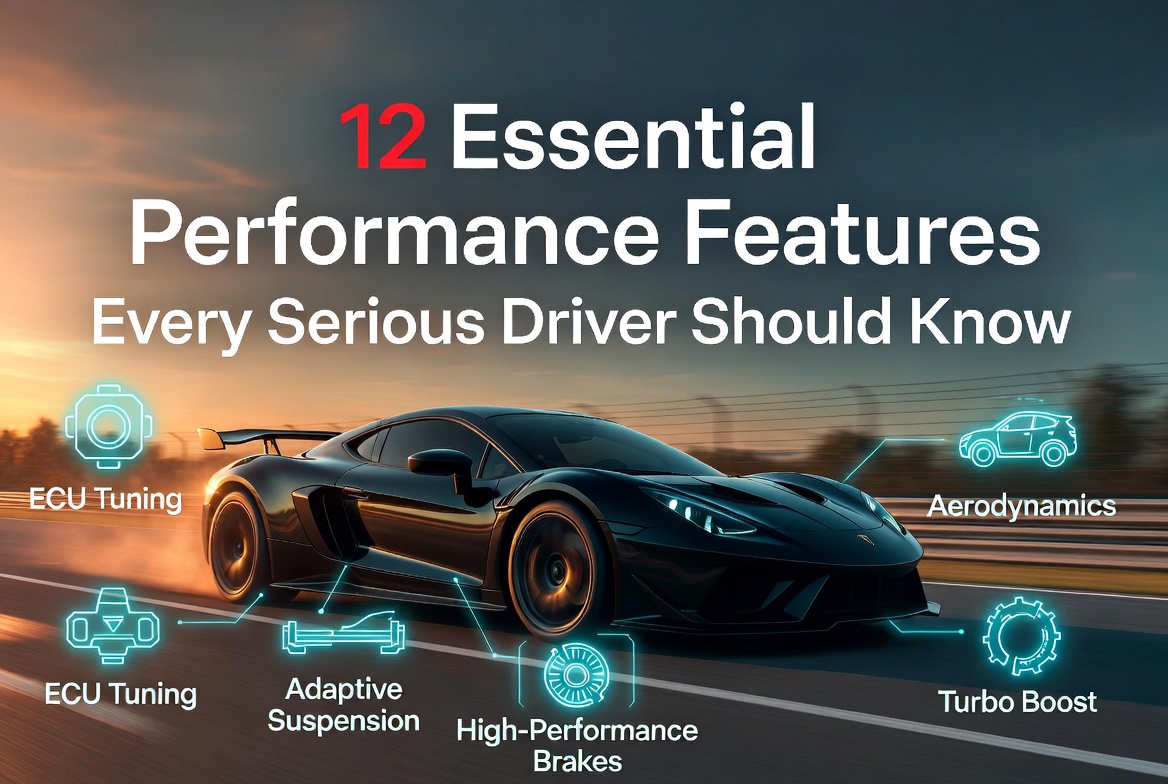
When people talk about performance cars or performance modes, they usually think only about speed and horsepower. But in modern vehicles, true performance is not just about engine power. It is a combination of engine technology, software control, handling systems, braking efficiency, and thermal management.
A car with good performance features should not only go fast in a straight line but also handle corners, stop safely, and maintain power consistently without overheating or lag.
Below are the most important features you should look for in any performance-oriented car or performance mode system.
1. Engine Tuning and ECU Control
The Engine Control Unit (ECU) is the brain of modern performance systems.
A good performance setup should include:
- Advanced ECU mapping
- Adjustable driving modes (Eco, Sport, Track)
- Real-time fuel and ignition optimization
- High RPM capability without engine stress
Why it matters:
A well-tuned ECU ensures the engine delivers power efficiently without damaging components or wasting fuel.
2. Turbocharging or Forced Induction System
Turbocharged or supercharged engines are a key indicator of performance potential.
Look for:
- Turbo boost control system
- Low turbo lag technology
- Intercooler for heat reduction
- Boost pressure adjustment in performance mode
Why it matters:
Forced induction dramatically increases horsepower and torque without increasing engine size.
3. Transmission Performance (Gearbox Technology)
A performance car must shift gears quickly and intelligently.
Best systems include:
- Dual-clutch transmission (DCT)
- Quick-shifting automatic gearbox
- Manual mode with paddle shifters
- Launch control system
Why it matters:
Fast and precise gear changes keep the engine in its power band for maximum acceleration.
4. Adaptive Suspension System
Handling is just as important as speed.
Look for:
- Adjustable dampers (soft, sport, track)
- Reduced body roll in corners
- Automatic adjustment based on road conditions
- Electronic suspension control
Why it matters:
A good suspension system improves grip, stability, and cornering speed without sacrificing control.
5. High-Performance Braking System
A fast car is useless without strong braking power.
Key features:
- Ventilated disc brakes
- ABS with performance tuning
- Brake force distribution system
- Optional ceramic brake upgrades
Why it matters:
Performance brakes ensure the car can stop quickly and safely even at high speeds.
6. Traction and Stability Control Systems
Modern performance cars rely heavily on electronic safety systems.
Look for:
- Adjustable traction control (on/off or sport mode)
- Stability control with sport settings
- Limited wheel slip for controlled driving
- Launch traction optimization
Why it matters:
These systems balance safety and performance by preventing loss of control while still allowing aggressive driving.
7. Aerodynamics and Body Design
Aerodynamics play a huge role in performance.
Important features:
- Rear spoilers or active wings
- Air vents for cooling and downforce
- Low drag coefficient design
- Underbody airflow management
Why it matters:
Better aerodynamics improve speed, stability, and fuel efficiency at high speeds.
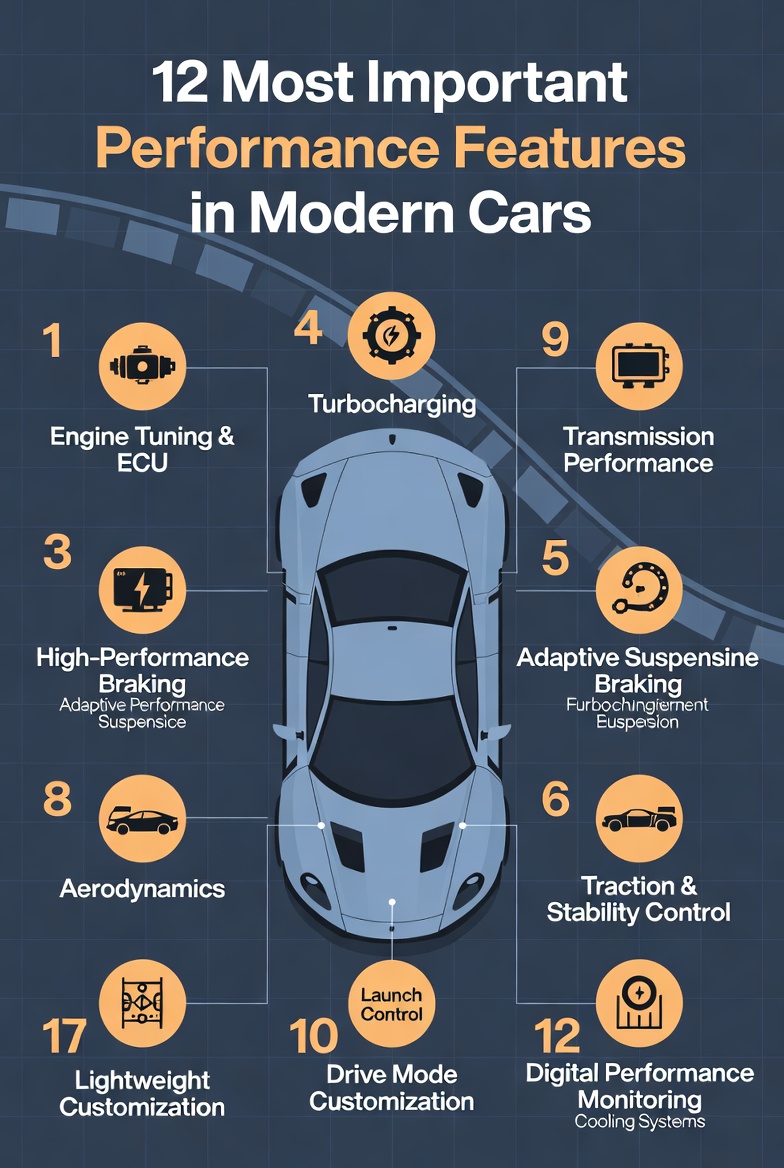
8. Cooling Systems (Engine and Transmission)
High-performance engines generate a lot of heat.
Look for:
- High-capacity radiator
- Oil coolers for engine and transmission
- Intercooler for turbo systems
- Active cooling fans in performance mode
Why it matters:
Without proper cooling, performance drops and engine damage can occur under stress.
9. Launch Control and Acceleration Systems
Launch control is a must-have feature in modern performance vehicles.
It includes:
- Controlled RPM launch settings
- Maximum traction off the line
- Reduced wheel spin
- Optimized power delivery during takeoff
Why it matters:
It allows the car to accelerate as fast as possible from a standstill without losing grip.
10. Drive Mode Customization (Performance Software)
Modern cars allow full software-based performance control.
Look for:
- Multiple drive modes (Eco, Comfort, Sport, Track)
- Custom mode settings
- Steering response adjustment
- Throttle sensitivity control
- Exhaust sound control
Why it matters:
This lets drivers adjust the car’s behavior for city driving, highways, or racing environments.
11. Lightweight Construction
Weight is one of the biggest factors in performance.
Best features include:
- Aluminum or carbon fiber body parts
- Lightweight wheels
- Reduced chassis weight
- Performance-oriented design structure
Why it matters:
Less weight improves acceleration, braking, and handling instantly.
12. Digital Performance Monitoring Systems
Modern performance cars often include advanced digital dashboards.
Look for:
- Real-time horsepower and torque display
- G-force meters
- Lap timers
- Engine temperature monitoring
- Boost pressure indicators
Why it matters:
These systems help drivers understand and optimize their performance in real time.
Conclusion
When evaluating a performance car or performance mode system, don’t focus only on horsepower numbers. True performance comes from a combination of engine tuning, transmission speed, suspension control, braking power, aerodynamics, and smart electronics.
A well-balanced performance setup ensures the car is not just fast, but also stable, safe, and responsive in all driving conditions.