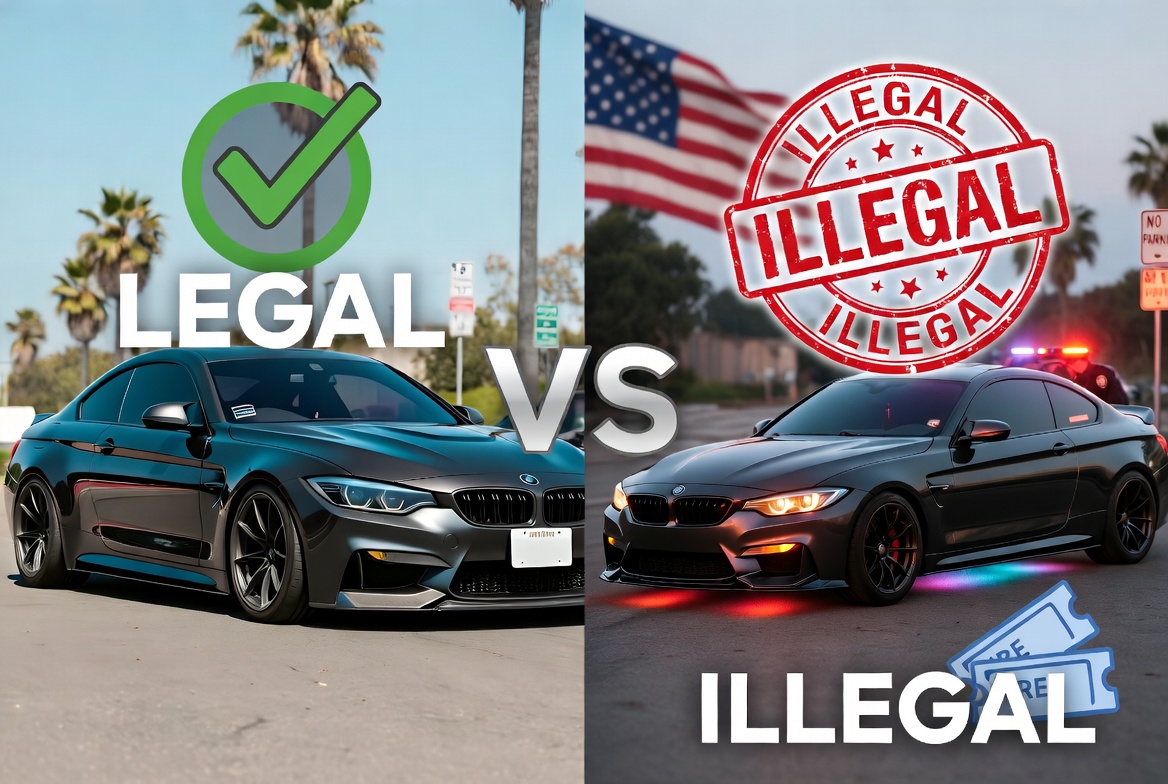
Car modification in the United States exists in a unique space where freedom and regulation collide. On one side, the country has one of the biggest car cultures in the world, where customization is not just accepted but celebrated. On the other side, there is a complex legal system that controls what you can and cannot do to your vehicle. This creates a situation where performance mods are not outright illegal, but they are never completely unrestricted either.
The legality of performance modifications in the United States depends on two main layers of law. The first is federal law, which sets baseline rules for safety and emissions. The second is state law, which builds on those rules and can vary significantly depending on where you live. This combination is what makes the system feel complicated, especially for car enthusiasts who want to modify their vehicles without running into legal trouble.
At the federal level, the most important factor is emissions compliance. The United States government, through environmental regulations, strictly prohibits tampering with emissions control systems. This means that removing or disabling components like catalytic converters or emissions sensors is illegal nationwide. These rules are enforced under laws such as the Clean Air Act, and violations can result in heavy fines that can reach thousands of dollars per vehicle.
This is where many performance mods run into trouble. Certain upgrades, especially aggressive tuning or exhaust modifications, can increase engine output but also increase emissions. If a modification interferes with emissions systems, it crosses a legal line regardless of which state you are in.
However, not all performance mods are illegal. In fact, many are perfectly legal as long as they do not interfere with emissions or safety systems. For example, cat-back exhaust systems that leave the catalytic converter intact are generally legal under federal law. The key idea is simple: performance upgrades are allowed, but they must not compromise environmental or safety standards.
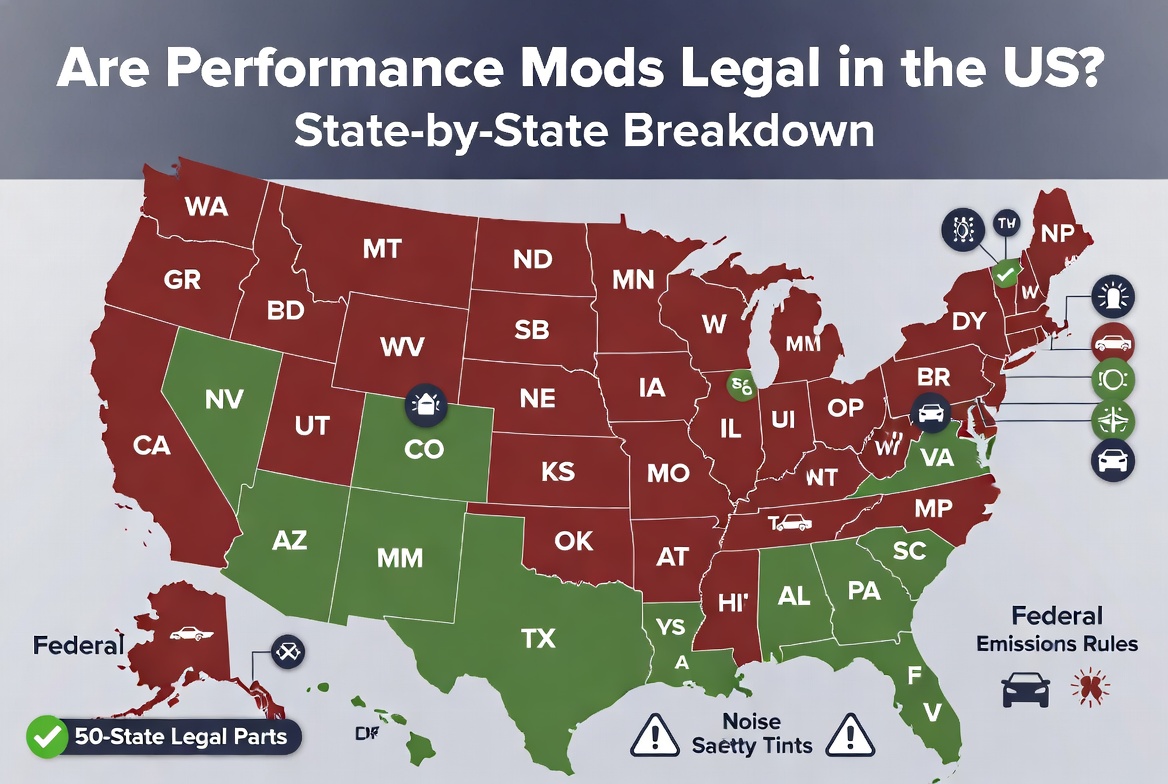
Where things become more complex is at the state level. Each state in the US has the authority to create its own vehicle laws, which means a modification that is legal in one state might not be legal in another. This creates a patchwork system where car owners must pay attention to local regulations, not just federal rules.
Some states are known for having stricter laws than others. California, for example, has some of the toughest regulations in the country. The state requires certain aftermarket parts to be certified to ensure they do not increase emissions. These parts must carry special approval, and without it, even a seemingly harmless modification can be considered illegal.
Other states like New York, New Jersey, and Massachusetts also enforce strict rules, particularly around emissions, inspections, and safety equipment. In contrast, states such as Arizona, Wyoming, and Mississippi tend to have more relaxed approaches, although they still require basic safety compliance.
Despite these differences, there are certain categories of modifications that are commonly regulated across almost all states. Exhaust systems are one of the most frequently targeted areas. While upgrading an exhaust is generally allowed, removing mufflers or creating excessive noise can lead to fines. Many states enforce noise limits, and loud exhaust systems can easily exceed those limits.
Lighting modifications are another heavily regulated area. Changing headlights, adding under glow lights, or installing colored lights can become illegal if they reduce visibility or mimic emergency vehicle lighting. Most states restrict the use of red and blue lights for non-emergency vehicles, and overly bright or improperly aligned lights can also result in penalties.
Window tint laws are another example of how state regulations vary. Each state sets its own limits on how dark window tint can be, often measured by the percentage of light that passes through the glass. A tint level that is legal in one state may be considered illegal in another, which can create problems for drivers traveling across state lines.
Suspension and ride height modifications are also subject to regulation. Many states have specific rules about how high or low a vehicle can be, particularly regarding bumper height and ground clearance. These rules are designed to ensure that vehicles remain safe and visible on the road.
What makes the situation even more challenging is that enforcement can vary. In some states, vehicle inspections are required annually, and illegal modifications can cause a vehicle to fail inspection. In others, enforcement happens mainly through traffic stops. This means that even if a modification goes unnoticed for some time, it can still lead to fines or penalties later.
Crossing state lines adds another layer of complexity. A modification that is legal in your home state does not automatically become legal in another state. Drivers are generally expected to follow the laws of the state they are currently in, which means a road trip could potentially expose a modified car to new legal risks.
There are also financial consequences tied to legality. If a modification is not compliant with state or federal laws, it can affect insurance coverage. Insurance companies may deny claims if they discover illegal or undisclosed modifications, which can turn a small upgrade into a major financial risk.
Despite all these regulations, the United States remains one of the most modification-friendly countries in the world. The key difference is that legality depends on how the modifications are done. A well-planned build that respects emissions rules, safety standards, and local laws can be completely legal and roadworthy.
This is why many aftermarket parts are marketed as “50-state legal.” These parts are designed to meet both federal and state requirements, making them safe to use across the country. While they may cost more than non-compliant parts, they provide peace of mind and reduce the risk of fines or failed inspections.
In the end, performance mods are not illegal in the United States, but they are regulated. The system is not about stopping car enthusiasts from modifying their vehicles. It is about ensuring that those modifications do not harm the environment, reduce safety, or create public disturbances.
The real challenge is not whether you can modify your car, but how you do it. Every modification carries a legal dimension, and understanding that dimension is just as important as understanding performance gains. In a country where laws change from state to state, being informed is what separates a smart build from a risky one.
For anyone modifying a car in the US, the goal is not just performance, but compliance. Because in the end, the best modification is the one that makes your car faster, better, and still completely legal on the road.