Window tinting has become one of the most common car modifications in the United States. It is not just about aesthetics. For many drivers, tinted windows provide privacy, reduce glare, and protect against heat and harmful UV rays. But while tinting may seem like a simple upgrade, it exists within a strict legal framework that varies across the country. Understanding these laws is essential, because even a small mistake in tint percentage can lead to fines, failed inspections, or unnecessary legal trouble.
What makes window tint laws unique is that they are not controlled by a single national standard. Instead, each state sets its own rules, creating a patchwork of regulations that can feel confusing, especially for drivers who travel frequently. At the center of these laws is a concept known as Visible Light Transmission, often referred to as VLT. This measurement represents the percentage of light that can pass through the window. The lower the VLT percentage, the darker the tint.
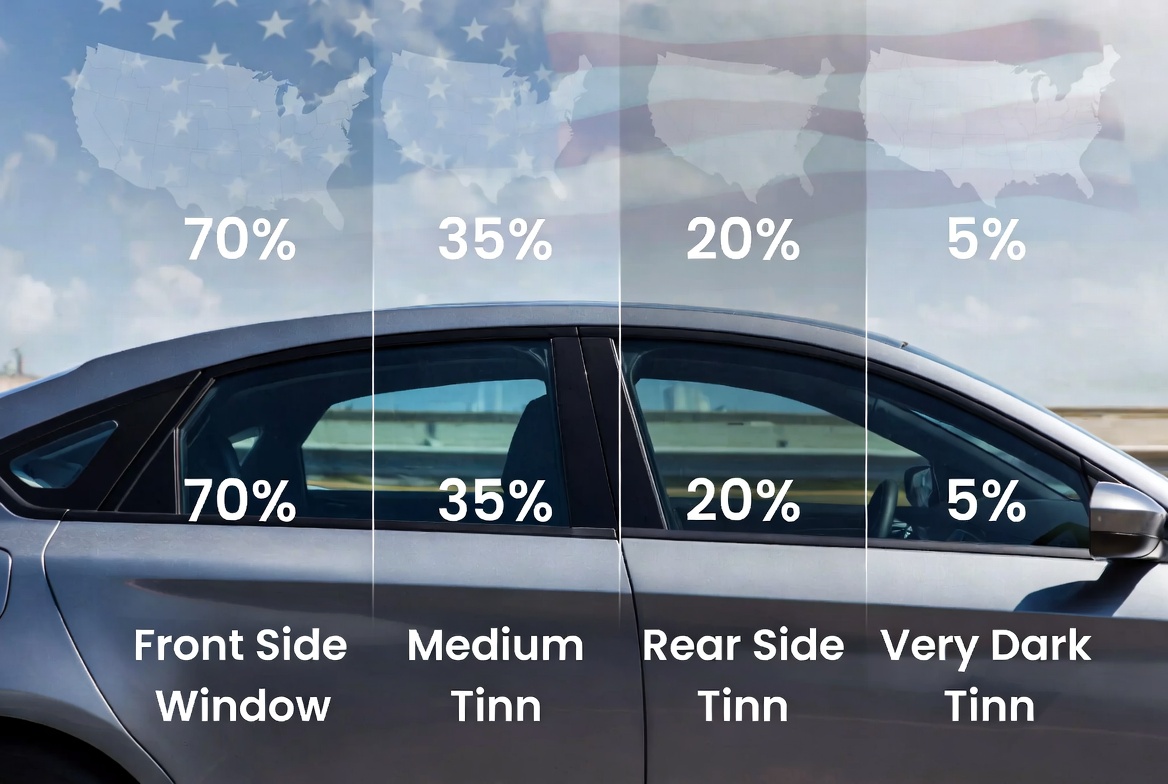
In most US states, the windshield is subject to the strictest rules. Typically, only a small strip at the top of the windshield, often called the AS-1 line, can be tinted. This is designed to reduce glare from sunlight without compromising the driver’s visibility. Anything beyond that strip is generally considered illegal, as it could interfere with safe driving conditions.
When it comes to front side windows, the laws tend to be more restrictive compared to rear windows. Many states require front side windows to allow a significant amount of light to pass through, often around 35 percent or higher. This ensures that law enforcement officers can see inside the vehicle during traffic stops, which is considered important for safety. Rear side windows and the back windshield, however, are usually given more flexibility. In some states, these windows can be tinted much darker, especially in larger vehicles like SUVs and trucks.
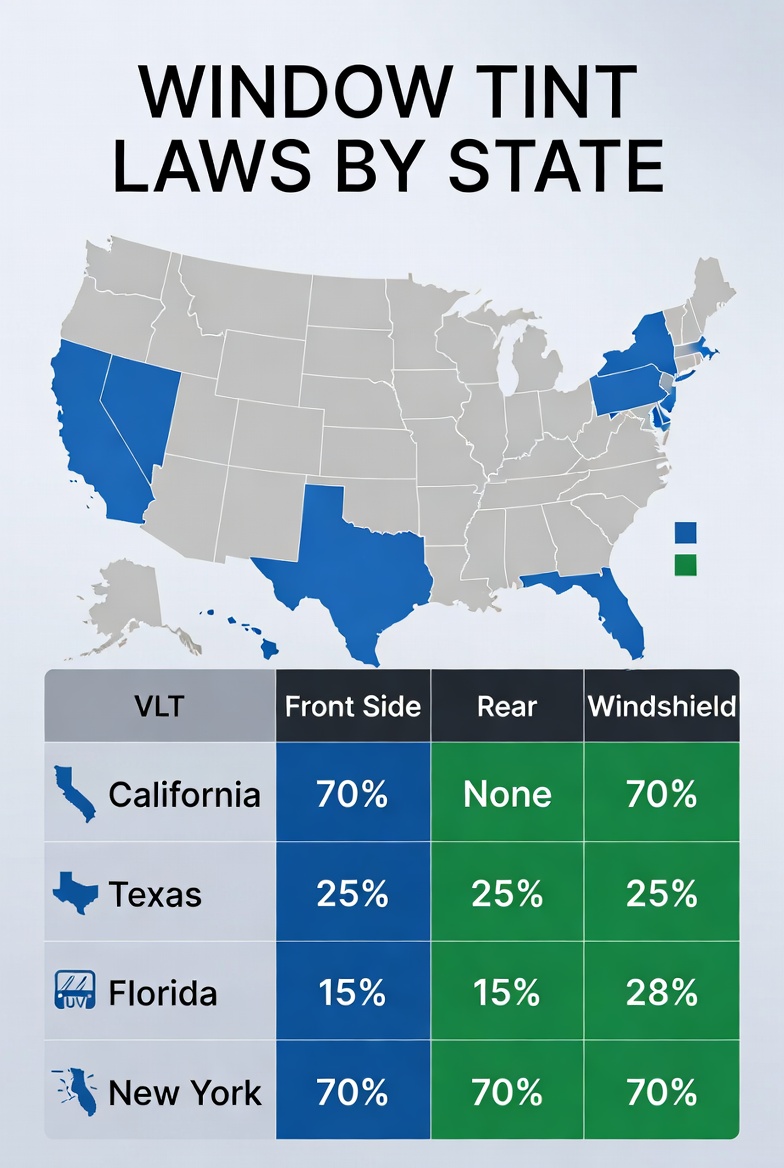
Despite these general patterns, the differences between states can be significant. For example, California is known for having stricter tint laws, requiring higher VLT percentages for front windows. Texas allows slightly darker tints but still maintains clear limits. Florida, on the other hand, permits darker tints on rear windows due to its intense sunlight and heat. These variations highlight why it is not enough to follow a general rule. Drivers need to be aware of the specific regulations in their state.
The reasoning behind these laws goes beyond visibility. Safety is the primary concern. Dark tints can reduce a driver’s ability to see clearly at night or in low-light conditions, increasing the risk of accidents. They can also make it more difficult for emergency responders to see inside a vehicle during an incident. From a law enforcement perspective, excessively dark windows can create safety risks during traffic stops, which is why many states enforce strict limits on front window tinting.
There are also rules regarding the type of tint used. Reflective or mirrored tints are often restricted because they can create glare that affects other drivers on the road. Some states specify how reflective a tint can be, limiting the percentage of light that can be reflected outward. Colors can also be regulated. While standard shades like black or gray are widely accepted, certain colors such as red, blue, or amber may be restricted because they can resemble emergency vehicle lighting.
Medical exemptions add another layer to the legal landscape. In many states, drivers with specific medical conditions that require protection from sunlight can apply for exemptions that allow darker tints than normally permitted. These exemptions usually require proper documentation and approval, and they are not automatically granted. Even with an exemption, there may still be limits to how dark the tint can be.
Enforcement of window tint laws varies depending on location. In some states, violations are primarily identified during routine traffic stops, while in others, they can be flagged during vehicle inspections. If a vehicle fails to meet the legal requirements, the driver may be required to remove or replace the tint to bring it into compliance. Fines for illegal tint can range from minor penalties to more significant costs, especially if the violation is repeated.
Another important consideration is how window tint laws interact with insurance. While tinting itself does not usually increase insurance premiums, illegal modifications can create complications. If a vehicle is involved in an accident and found to have non-compliant tint, it could potentially affect claims or liability. Insurance companies expect vehicles to meet legal standards, and failing to do so can introduce unnecessary risks.
Traveling across state lines introduces additional complexity. A tint that is legal in one state may not meet the requirements of another. While enforcement for out-of-state vehicles can vary, drivers are generally expected to follow the laws of the state they are currently in. This can create challenges for those who frequently travel or relocate, as they may need to adjust their vehicle’s tint to remain compliant.
The popularity of window tinting continues to grow in the United States, driven by both functional and aesthetic benefits. Advances in tint technology have made it possible to achieve better heat rejection and UV protection without relying on extremely dark films. This has led to the development of high-performance tints that remain within legal limits while still providing significant comfort and protection.
From a financial perspective, window tinting is relatively affordable compared to other car modifications, but the cost of doing it incorrectly can outweigh the initial savings. Choosing a professional installer who understands local laws can help avoid compliance issues. Many reputable installers provide guidance on legal limits and ensure that the final result meets state requirements.
In the broader context of car modification, window tinting represents a balance between personalization and regulation. It offers clear benefits, but it also comes with clear responsibilities. The laws are not designed to prevent customization, but to ensure that safety and visibility are not compromised.
In the end, window tint laws in the United States are less about restriction and more about control. They create a framework that allows drivers to enjoy the benefits of tinting while maintaining safe driving conditions for everyone on the road. Understanding these limits is not just about avoiding fines. It is about making informed decisions that keep your vehicle both stylish and fully compliant.
For anyone considering window tinting, the key takeaway is simple. Know your state’s laws, choose the right materials, and prioritize safety alongside appearance. Because when it comes to car modifications, the best upgrade is one that looks good, performs well, and stays completely within the law.