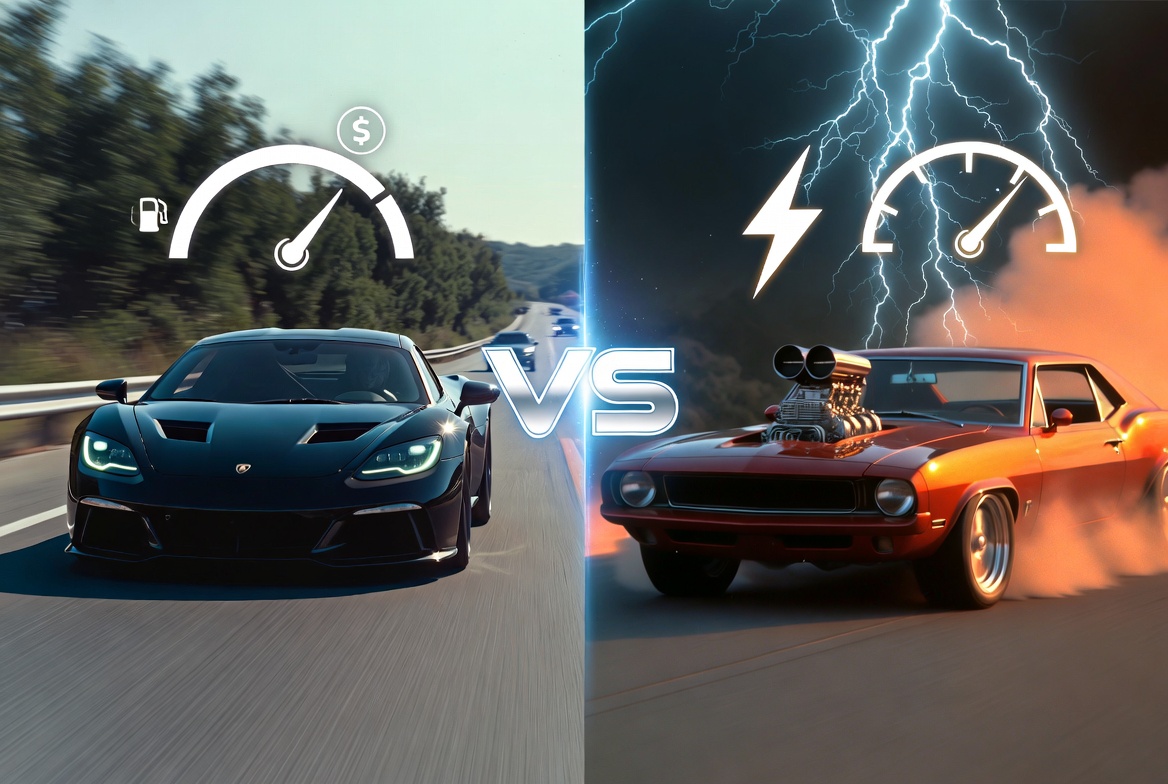
In the performance car world, few debates are as old and as intense as turbocharger versus supercharger. Both are designed to do the same thing: force more air into the engine, allowing it to burn more fuel and produce more power. But while the goal is the same, the way they deliver that power and the cost involved creates two completely different experiences for car owners in the United States.
Understanding which one is “worth it” in 2026 is not just about speed. It is about cost, efficiency, driving feel, maintenance, and long-term value. These factors matter more than ever today, especially as fuel prices, insurance costs, and modification regulations continue to influence decisions in the US automotive market.
At a basic level, both turbochargers and superchargers are forms of forced induction. They increase engine performance by compressing air before it enters the combustion chamber. More air means more fuel can be burned, and more fuel means more power.
However, the key difference lies in how they are powered. A turbocharger uses exhaust gases that would otherwise be wasted, while a supercharger is directly driven by the engine itself.
This difference might sound technical, but it has a major impact on both cost and performance.
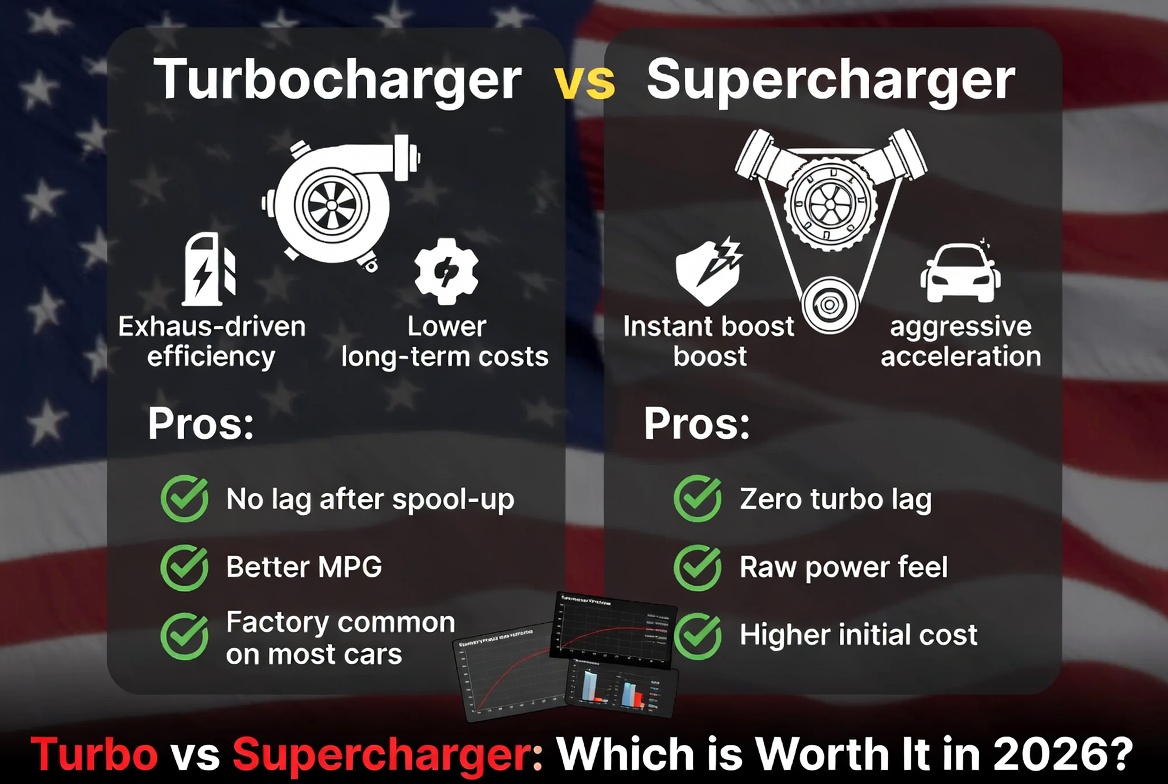
When it comes to performance, turbochargers are often seen as the smarter and more efficient option in modern cars. Because they use exhaust energy, they do not place additional load on the engine in the same way a supercharger does. This makes them more fuel-efficient and better suited for daily driving in the United States, where fuel economy plays a big role in ownership costs.
Turbochargers also tend to produce strong mid-range power, which is where most everyday driving happens. This makes them ideal for highway acceleration and overall efficiency. However, they do come with one well-known drawback: turbo lag. This is the slight delay between pressing the accelerator and feeling the boost, caused by the time it takes for exhaust gases to build up and spin the turbine.
Superchargers, on the other hand, deliver power in a completely different way. Because they are directly connected to the engine, they provide instant boost with no delay. The moment you press the accelerator, the power is there. This immediate response makes superchargers extremely popular in muscle cars and performance builds focused on raw acceleration.
That instant power comes at a cost, both literally and mechanically. Since a supercharger draws energy directly from the engine, it reduces overall efficiency and increases fuel consumption.
In simple terms, you gain instant speed but sacrifice fuel economy.
Cost is where the difference becomes even more important for most car owners. In the United States aftermarket scene, turbocharger kits are generally more affordable to operate and install compared to superchargers. While both systems can be expensive, turbos are often considered the more budget-friendly option in terms of overall efficiency and long-term use.
A typical turbocharger setup in the US can range from around 2000 to 5000 dollars depending on the car and complexity. Installation costs can vary widely, especially if custom fabrication is needed. Supercharger kits usually fall in a similar or slightly higher price range, but they often come with higher long-term costs due to increased fuel usage and engine load.
Maintenance is another factor that separates the two. Turbochargers are more complex systems with additional components and higher heat levels, which means they require careful maintenance, proper cooling, and regular oil changes.
Superchargers are mechanically simpler and easier to access, but they put more strain on the engine over time, especially in high-performance builds.
In 2026, one of the biggest trends in the automotive industry is the shift toward efficiency without sacrificing performance. This is one of the main reasons turbochargers have become far more common in modern vehicles. Many manufacturers prefer turbos because they help meet fuel economy and emissions standards while still delivering strong performance.
Superchargers, while still popular in certain segments, are now more niche. They are often chosen by enthusiasts who prioritize driving feel and instant throttle response over efficiency. In drag racing or track-focused builds, the immediate power delivery of a supercharger can be a major advantage.
Another important consideration is driving style. Turbochargers tend to suit drivers who want a balance between power and practicality. They are ideal for daily drivers, long-distance travel, and modern performance cars. Superchargers, on the other hand, are better suited for those who want aggressive, instant acceleration and a more traditional performance feel.
There is also a psychological aspect to this choice. Turbocharged cars often feel smoother and more controlled, especially at higher speeds. Supercharged cars feel more aggressive and immediate, delivering a raw driving experience that many enthusiasts find more exciting.
From a financial perspective, turbochargers usually offer better value for money in the United States. They provide strong performance gains while maintaining better fuel efficiency and lower long-term costs. Superchargers, while powerful, tend to be more expensive to run and maintain over time.
In the end, deciding which is worth it in 2026 depends on what you value most. If efficiency, modern performance, and cost-effectiveness are your priorities, a turbocharger is the better choice. If instant power, aggressive response, and driving excitement matter more, a supercharger may be worth the extra cost.
Both systems can significantly increase engine power, sometimes by more than 50 percent when properly installed and tuned.
But the real difference lies not in how much power they produce, but in how they deliver it and what it costs you to get there.
For most drivers in the United States today, the turbocharger represents the smarter investment. It aligns with modern automotive trends, offers better efficiency, and delivers strong real-world performance. But for those who crave instant power and a more visceral driving experience, the supercharger still holds a unique appeal that cannot be easily replaced.
In the end, it is not just about which one is better. It is about which one fits your driving style, your budget, and your vision for your car.